

 Maui STR Ban is no longer hypothetical. Less than a week after the county passed Bill 9, more than 40 condo owners in the Kaanapali area filed a lawsuit claiming the new law strips them of decades of vested rights and slashes property values. This post breaks down the Kaanapali Royal case, the legal arguments being made, and practical implications for buyers and sellers on Maui.
Where this started: Kaanapali Royal and the Kaanapali resort neighborhood
Kopali Royal is a 105-unit condominium complex built in 1980, with two-bedroom, two-bath units sitting on the Kapalua golf course and surrounded by major resorts. For nearly 45 years, apartment-zoned condos in this resort pocket have operated as short-term rentals. Owners point to original project declarations — recorded in 1979 and reaffirmed in 1999 — that explicitly allowed units to be used as temporary residences and lodging.

The plaintiffs argue that the Kaanapali Resort area was designed and has functioned as a tourism hub where hotels, resort condos, and commercial enterprises co-exist. From their perspective, the Maui STR Ban — as implemented through Bill 9 — singles out long-established resort-style condo communities and forces an abrupt conversion to long-term housing that was never contemplated when these properties were approved.

How property values have already reacted
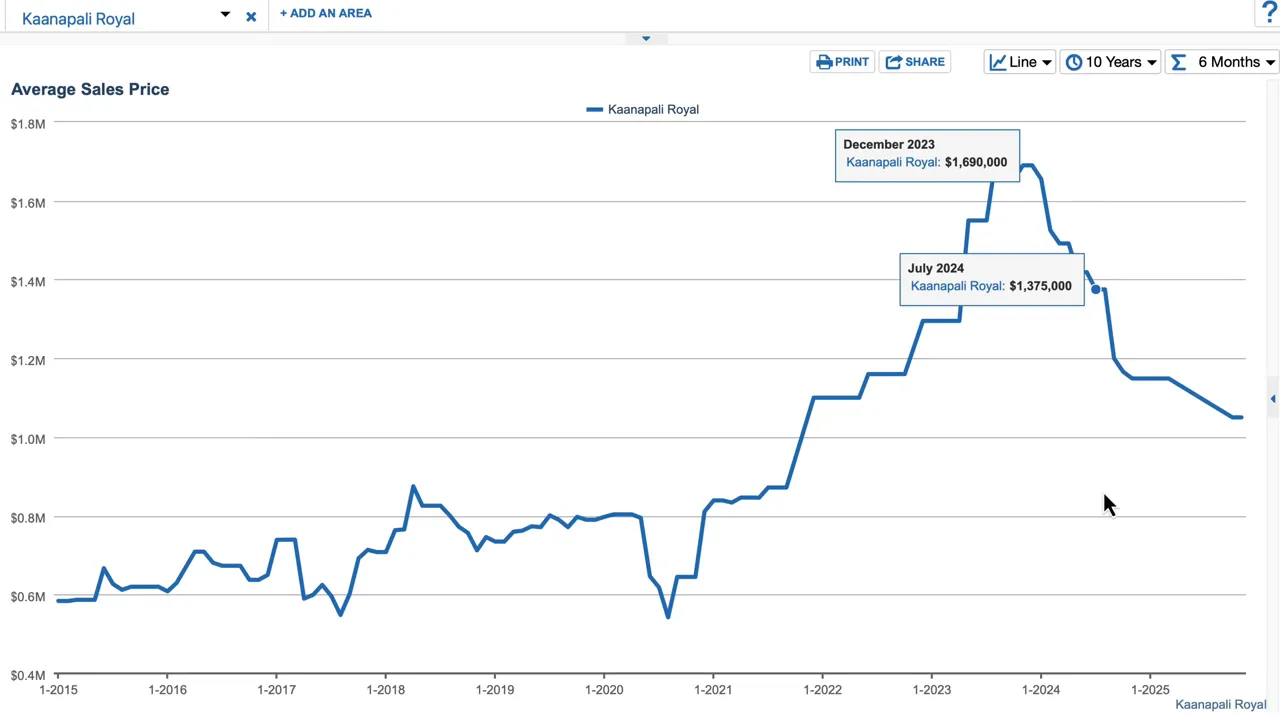
Market data for Kaanapali Royal shows a steep decline in average sale prices since the bill was introduced. A six-month rolling average peaked around December 2023 at roughly $1.69 million. Since Bill 9 appeared in May of 2024, average prices dropped to approximately $1.05 million — a decline of about 38 percent in a short period.
That drop is not caused solely by one ordinance. Rising mortgage rates and a slower tourism season on Maui also play roles. Still, the timing suggests the Maui STR Ban and the publicity surrounding it have become a material factor in buyer sentiment for these condo assets.
What the lawsuit actually alleges
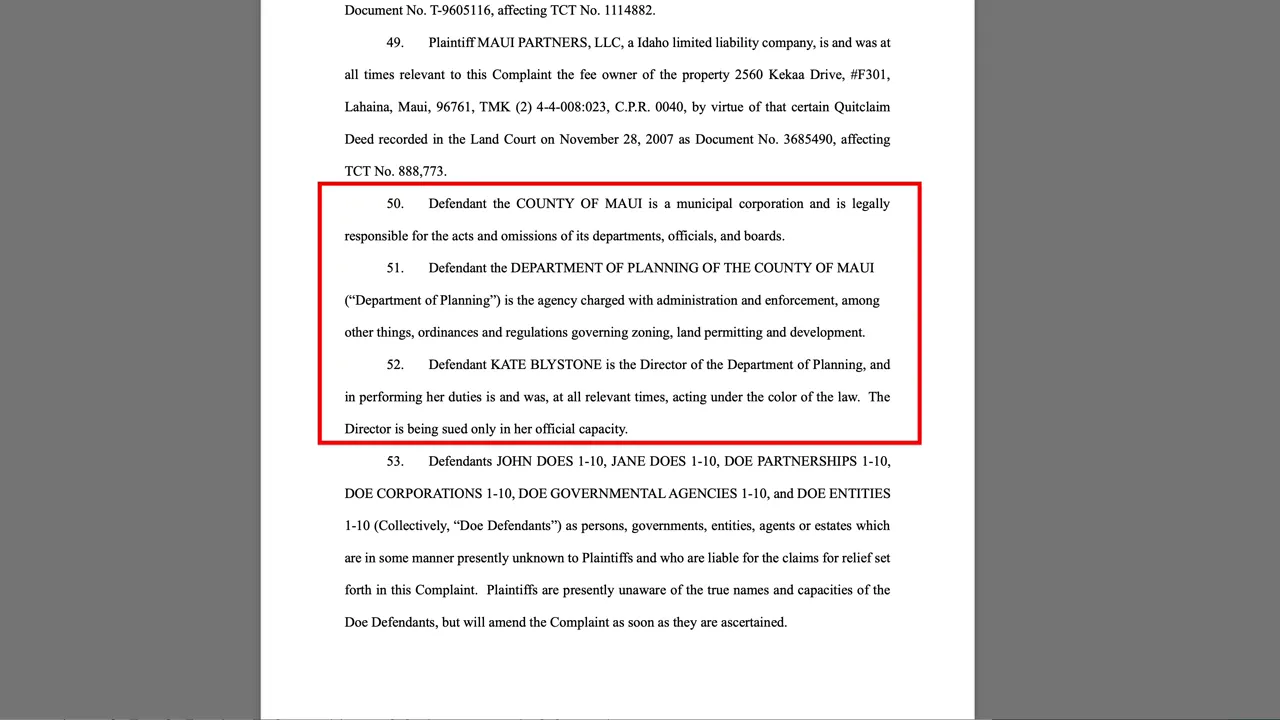
The complaint names the County of Maui, the Department of Planning, and the planning director in her official capacity. Key factual and legal points raised in the filing include:
- Longstanding reliance: Owners assert they relied on nearly 45 years of county approvals and records that allowed transient short-term use in apartment-zoned condominiums like Kopali Royal.
- Project declarations: Recorded declarations specifically describe units as suitable for permanent or temporary lodging, which plaintiffs say are enforceable project documents recognized by the county.
- Regulatory taking: The complaint argues the county’s action amounts to a taking that requires just compensation because it strips owners of vested property rights without paying owners for the loss in value.
- Due process and equal protection: Plaintiffs claim the county denied them due process and treated similarly situated properties differently without a rational basis.
- Unreasonable phase-out: The lawsuit disputes the three-year phase-out period for West Maui, calling it insufficient compared to the decades-long historic allowance of short-term rentals at these properties.
Where exhibit 2 and upzoning fit in
The county council included Kaanapali Royal on an "exhibit 2" list of apartment-zoned properties that a temporary investigative group recommended be upzoned to hotel so those properties could lawfully continue short-term operations. Plaintiffs say they should not have to rely on future re-zoning promises — they contend their rights are already vested and protected.

In short, owners are asking for both a preliminary injunction to halt enforcement of Bill 9 and a declaration that the county must either compensate owners for the loss or restore their prior allowed uses.
Breaking down the legal theory in plain terms
There are a few legal concepts at play worth explaining:
- Vested rights — Owners argue they have a legal expectation to continue short-term rentals because the county recognized such uses for decades and recorded project documents that promised transient lodging.
- Regulatory taking — When a regulation so diminishes property value or use that it is effectively the same as a taking, courts sometimes require compensation under the Constitution.
- Due process and equal protection — These claims center on whether the county followed fair notice and treated like properties the same way.
None of these claims is guaranteed to succeed, but they form a credible framework that many judges take seriously when large economic impacts and long reliance interests are involved.
What this means for the Maui real estate market
From a market perspective the impact is already visible. Uncertainty alone can depress pricing, slow demand, and create a buyer’s market in affected segments. Key takeaways:
- Opportunities for buyers: If the lawsuit does not immediately restore rights, many sellers will need to price aggressively, which can create attractive buying windows for investors who understand the legal landscape.
- Risk for sellers: Owners needing to sell may face lower offers and longer time on market until legal clarity returns.
- Not all properties are affected: Roughly half of Maui’s short-term rentals would not be touched by Bill 9 even if it survives legal challenges. Those properties remain viable and may become more attractive to certain buyers.
Practical advice
If you are considering buying or selling on Maui right now, consider these steps:
- Work with a real estate professional who is tracking legal developments and zoning changes.
- Request clear documentation, including recorded project declarations and placement on any county lists like exhibit 2.
- Factor legal and regulatory risk into pricing and financing assumptions rather than relying on historical income alone.
Final thoughts
The Kaanapali Royal lawsuit highlights a core tension: the county’s goal to reshape housing policy versus property owners’ expectation that long-established development rights will be respected. The Maui STR Ban has ignited legal, financial, and community-level questions that will ripple through the island’s condo market for the foreseeable future.
If you need help evaluating a property in light of these developments, verify project declarations and zoning status, and consider scenarios for both restored rights and continued restrictions. Armed with the right information, buyers and sellers can make informed decisions during this unsettled period.
Posted by Jesse Wald onEnjoy this blog post? Click here to subscribe for updates
Leave A Comment